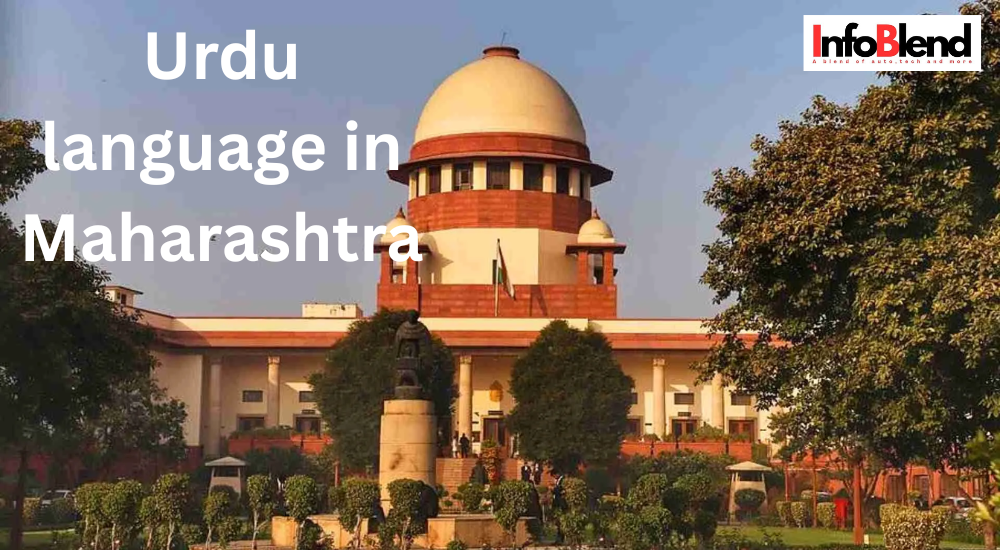
Supreme Court Upholds Urdu Language in Maharashtra Signboards
In a significant ruling, the Supreme Court approved the use of Urdu on signboards of the Patur Municipal Council in Akola, Maharashtra. The court emphasized that language belongs to people—not religion.
The apex court dismissed a plea filed by Varshatai Sanjay Bagade, a former municipal councillor, who had challenged the inclusion of Urdu alongside Marathi on the signboard of the Patur Municipal Council. The court emphasized that there is no legal barrier to using Urdu in addition to Marathi under the Maharashtra Local Authorities (Official Languages) Act, 2022.
Urdu is Indian, Not Foreign: Supreme Court
The bench of Justices Sudhanshu Dhulia and K Vinod Chandran highlighted that Urdu is not foreign to India, stating clearly that the misconception linking Urdu solely with a particular religion is historically inaccurate and socially divisive.
“Language is not religion. Language belongs to a community, to a region, to people; and not to a religion.”
The court noted that the association of Urdu with Muslims and Hindi with Hindus was a result of colonial influence. Justice Dhulia described Urdu as the “finest specimen of Ganga-Jamuni tehzeeb”, representing the rich, composite culture of northern and central India.
Purpose of Language is Communication
The court also reaffirmed that the primary role of language is communication, not religious or political identity.
“All the municipal council wanted to do was to make an effective communication. This is the primary purpose of a language,” the court observed, backing the Bombay High Court’s earlier judgment from 2021.
The municipal council had clarified that Urdu had been used in the region since 1956, and continues to be widely understood by locals.
India’s Linguistic Diversity Must Be Celebrated
Citing the 2001 Census, the Supreme Court remarked that India had 122 major languages and 234 mother tongues, including Urdu as the sixth most spoken scheduled language. The court stressed the need to embrace linguistic diversity rather than restrict it.
“We must respect and rejoice in our diversity, including our many languages,” the bench said.
Conclusion
The Supreme Court’s stand reinforces a broader constitutional value — India’s linguistic plurality. This judgment not only protects the use of Urdu language in Maharashtra municipal bodies but also reasserts the secular, inclusive spirit of Indian democracy.