
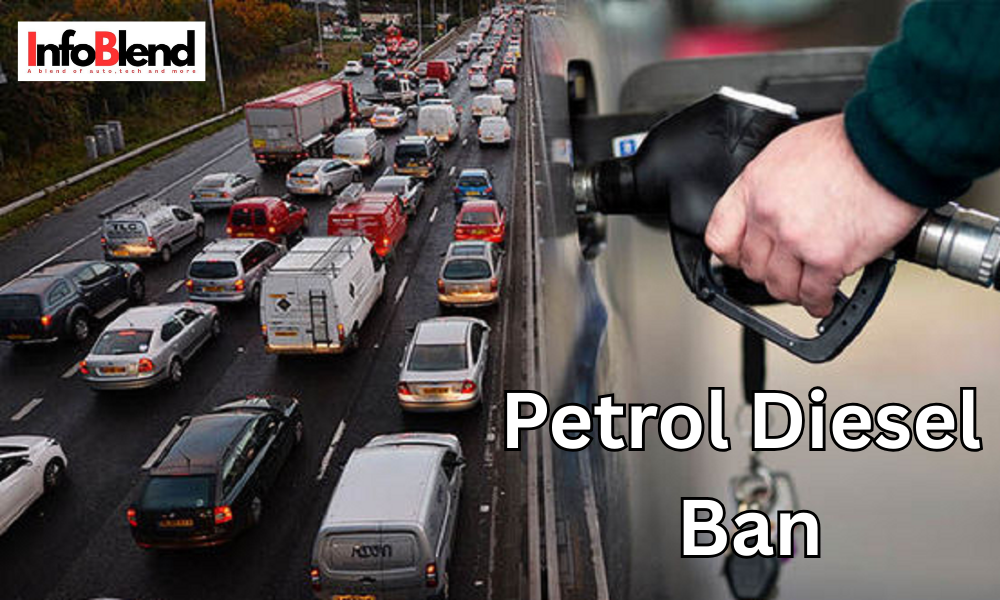
Government Explains Why Petrol Diesel Ban Is Not Possible
The Indian government has been actively seeking measures to curb pollution, one of which included exploring a Petrol Diesel Ban. However, current vehicle owners were concerned about massive depreciation in their vehicles’ resale value. The government, citing major economic impacts, recently informed the Bombay High Court that banning petrol and diesel vehicles outright is not a practical move. Let’s dive into the government’s concerns and the broader implications of such a ban.
Ban On Petrol And Diesel Vehicles: Government’s Concern
In January 2025, the Bombay High Court suggested replacing petrol and diesel vehicles with cleaner alternatives like CNG and electric vehicles. In response, the government emphasized the risks of an abrupt transition, which would impact industries, workers, and supply chains.
Mumbai alone has 4.5 million registered vehicles, with 60% relying on petrol or diesel. Notably, 90% of commercial transport vehicles operate on diesel, crucial for transporting food, fuel, and essentials from neighboring states. A sudden Petrol Diesel Ban would escalate product costs and cause major economic disruptions. Automobile manufacturers might also have to downsize, leading to large-scale unemployment.
Also Read: Ray-Ban Meta Smart Glasses Set to Launch in India
Will Mumbai Repeat Delhi’s Mistake?
Delhi banned 10-year-old diesel cars in 2015 to tackle pollution. However, despite the ban, Delhi remains among the top five most polluted cities. The decision also caused massive depreciation in vehicle values and inconvenienced residents.
Mumbai is currently facing similar challenges, with a lack of sufficient electric charging stations and very few CNG outlets, leading to long queues. Although Union Minister Nitin Gadkari has repeatedly advocated banning diesel vehicles, no official regulations have yet been announced by the Ministry of Road Transport and Highways.
Who Will Be Impacted The Most By The Petrol Diesel Ban?
The hardest hit by a sudden Petrol Diesel Ban would be daily wage earners and small delivery workers who depend on affordable petrol bikes. Switching to an electric vehicle would be financially unfeasible for them due to high costs and loan burdens.
Recent car buyers, especially those investing in diesel vehicles, also face potential massive losses in resale value, with no government support offered for transitioning to EVs.
A Better Approach: Gradual Phase-Out Of Petrol And Diesel Vehicles
Rather than an outright Petrol Diesel Ban, the government could take gradual steps. For instance, restricting 15-year-old diesel commercial vehicles could be a start. Encouraging public transport to switch to CNG and EV alternatives would also help.
Learning from Kolkata, where half of the diesel buses have been replaced with electric ones, Mumbai could adopt a phased strategy to avoid shocking the economy. Incentives for EV buyers, subsidies, and better infrastructure would ease the transition and ensure a sustainable and pollution-free future.