
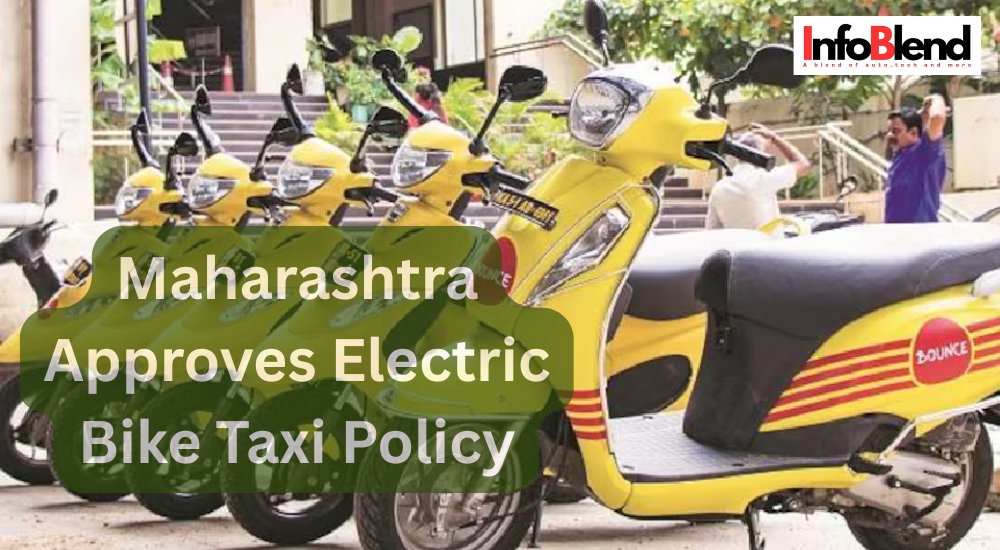
Maharashtra Rolls Out Electric Bike Taxi Policy
The Maharashtra government has taken a major step toward sustainable transportation by launching a new Electric Bike Taxi Policy. This initiative allows bike taxi services to operate in cities with populations exceeding one lakh, aiming to strengthen urban mobility and reduce pollution.
Electric Bike Taxi Policy Mandates 100% EV Fleet
Under the new policy, only electric bike taxis can operate. By mandating a fully electric fleet, the state encourages eco-friendly commuting and aims to cut down on urban emissions significantly.
Additionally, the government will issue 50 permits in the initial phase. Each permit will remain valid for five years and cannot be transferred.
Safety and Inclusivity Take Center Stage
Clear Rider and Driver Guidelines
The policy ensures safety and accountability. It permits only one passenger per ride and requires drivers to be at least 20 years old. However, children under 12 cannot use this service, ensuring an added layer of protection.
Also Read: Ministry of Home Affairs Issues Alert on Fake ₹500 Notes That Look Real
Provisions for Female Safety
To protect women commuters, the policy mandates a protective shield between riders and passengers. Moreover, the government plans to raise the number of female drivers to 50%, promoting inclusivity and economic participation, although it has not specified a timeline yet.
Better Security Through Tech and Coverage
GPS and Emergency Features Required
The policy ensures safety by requiring all electric bike taxis to feature GPS tracking, an emergency contact button, and seasonal covers for monsoon protection. These upgrades aim to make rides safer and more reliable, especially during unpredictable weather.
Insurance Coverage for All
The government has made it mandatory for aggregators to provide insurance coverage for both the rider and the passenger. This move ensures compensation in the event of any accidents or fatalities.
Smart Ride Limits to Improve Connectivity
To promote responsible use and service efficiency, each ride will have a maximum limit of 15 kilometers. This limitation will help maintain high service standards while improving last-mile connectivity in busy urban areas.
By focusing on electric vehicles, passenger safety, and inclusive job opportunities, Maharashtra’s new policy sets a strong example for modern urban mobility. The integration of technology and rider-friendly rules makes this a promising model for other states to follow.